
Where I introduce the “A-B Theory of Time” to be used in my work. Written 2-26-24.
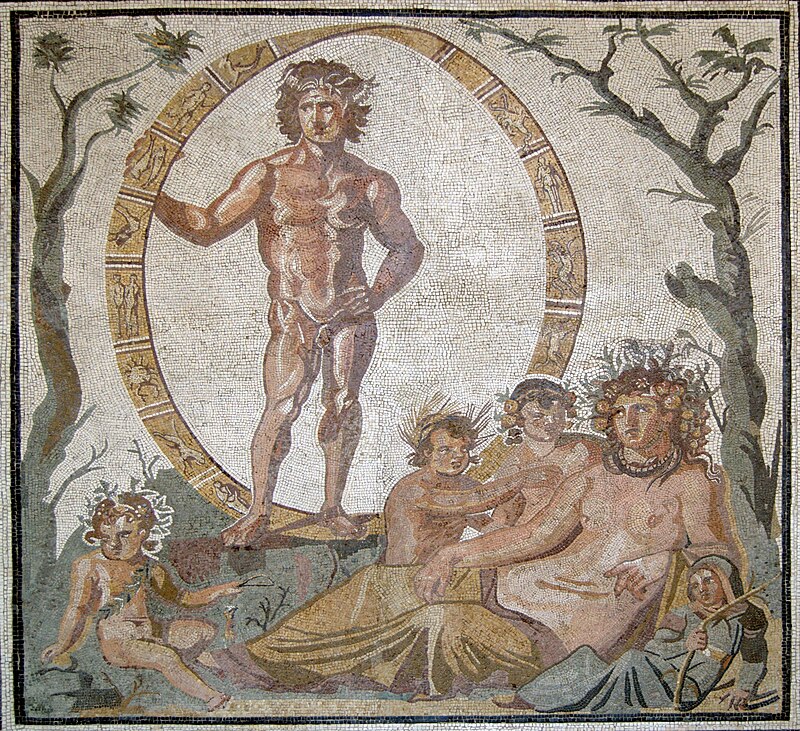
“Time is a child playing draughts; the kingship is a child’s.” -Heraclitus, “On The Universe”, Fragment 79
“People assume that time is a strict progression from cause to effect, but actually from a non-linear, non-subjective viewpoint, it’s more like a big ball of wibbly-wobbly, timey-wimey stuff.” – Doctor Who, “Blink”
Time is weird.
In our last chapter, we talked about how reality works. And one of the things the alien, our intellectual proxy in all of these meanderings, came to believe is that time is a dimension, like length, width, and height, and that durations of time are analogous to distances in space. In this chapter we will build on this idea to present the theory of time I will use in this work.
First, let us consider tensed propositions like “I was walking, “I am walking”, and “I will be walking”. We talked a little about propositions that were only true at specific times or places in the chapter on logic, and at that time I showed how using indexicals to situate such propositions grants them definite truth values. For example, the proposition “it is raining” has no definite truth value without being situated, but when we say “It rains in San Francisco at 6am on February 26, 2024” the (now tenseless and situated) proposition has a definite truth value. But when we make propositions without situating them in this tenseless way, we have propositions that change truth values over time, and that makes it very difficult to think clearly about them. In an effort to think clearly about them, we have to discuss first how time works. Note that in this chapter I want to talk purely about the metaphysics of time (how time works), not the phenomenology of time (the way we actually experience and live in time as people), which I will discuss in the next chapter.
There are two primary theories of time in modern anglophone philosophy, known as the “A theory” and the “B theory”. Here I will explain these theories and argue for why I think that a hybrid of these two theories is more true than either of them alone. Then I will attempt to ground our understanding of the “A-B theory” in terms of the relation-centric metaphysics I argued for in the portion of this work on metaphysics.
The “A theory” orders events in terms of a notion of a constantly moving “river of time” where each event changes temporal properties as we “move” forward into the future.
The “B theory” orders events in terms of relations between events and does not posit the existence of temporal properties.
For example, let us say that yesterday I wore a blue shirt, today I am wearing a pink shirt, and tomorrow I plan on wearing a black shirt. The “A theory” would conceive of this set of events as “the event ‘me wearing a blue shirt’ has the temporal property ‘one day in the past’, while the event ‘me wearing a pink shirt’ has the temporal property ‘in the present’, and the event ‘me wearing a black shirt’ has the temporal property ‘one day in the future’”. Thus the “A theory” talks in terms of properties and each event changes temporal properties as the “river of time” moves.
But the “B theory” talks in terms of dyadic relations. The same set of events described above would be described under the “B theory” thus: “one day before I wore the pink shirt I wore the blue shirt and two days after I wore the blue shirt I wore the black shirt”.
Now, the “A theory” sounds plausible and suits our intuitions and experiences about time. We do, in fact, experience ourselves seemingly moving forward in a dimension of time where the past seems “behind us” while the present seems “with us” and the future seems “ahead of us”. But this model of time has to posit a sort of metatemporal dimension in which the motion of time itself is occurring, which forces us to imagine a “speed of time” where we have to use statements like “time moves forward at the speed of 1 second per second”, which seem circular and meaningless. Thus, while the “A theory” seems to preserve our intuitions and experience of time, upon examination we see at least one unresolvable problem.
The “B theory”, on the other hand, seems counterintuitive and to not preserve our experiences of time. We definitely seem to experience time passing (as anyone who has been forced to wait for a late bus can attest). But the logical problems created by the “A theory” are resolved when we talk in terms of tenseless relations between events rather than in terms of tensed propositions that change their truth values over time. Logic wants to speak in terms of eternal statements like those of mathematics, where 3 is always an odd number, it always comes after 2 and before 4, and so on. It strains our notions of logic when we are forced to speak in tensed terms that change truth values every moment. This is why in the physical sciences we tend to see statements that are tenseless and situated except in the case of laws, which by definition have been generalized, but have still been stated in terms of tenseless statements. In addition to this, the current model of special relativity in the physical sciences seems to support the “B theory”, which will matter more to some people than others, but I mention here because it seems relevant to me. The “B theory” presents time as a distributed manifold where to say that a person aged is to say that at one location in the manifold they had specific properties and that at another location in the manifold they had a different set of specific properties, and this is exactly how special relativity represents change over time. However, it seems impossible to reconcile the “B theory” with our experiences of time. For example, if the “B theory” is correct, how can we explain our difference in attitudes about an event when the event lays in the past as opposed to when it lays in the future? This difference in attitudes seems to point at an essential difference between events that lay in the past as opposed to events which lay in the future, which seems to further imply the “A theory”. However, we also have essentially similar attitudes towards events that lay in the distant past as those that lay in the far future, and these attitudes seem analogous to those we have about events which take place at a great physical distance, which returns us to a view of time that is more like the “B theory” where events distant in time are directly analogous to those distant in space.
So what are we to do? Both theories seem exactly as accurate as they are inaccurate. One theory is consistent with one set of our intuitions and experiences of time and the other is equally consistent with our logical and scientific models of time. In light of these facts, it seems clear that a hybrid of the two theories that preserves our collective intuitions and experiences while getting rid of the aspects that cause logical problems will work better than either theory alone.
So here I will present the “A-B” theory of time:
Time is, as implied in special relativity, a continuous manifold where instances of time are locations within the manifold.
Events occur in this manifold in a fundamentally tenseless way, but in a way that preserves our notions of the passage of time through the causal relations between events. This “directionality of causation” brings about what we perceive as the “river of time”, as our mental and physical processes follow the processes of causation. In the physical sciences, this directionality of causation seems to be either identical with or brought about by the continuous increase in entropy in physical systems.
Thus we have a theory that preserves our intuitions and experiences of time while still allowing us to talk about events in time in a tenseless and/or relation-oriented way. We end up with what is sometimes called a “Moving Spotlight” theory of time, where the “spotlight” that highlights our perception of the passage of time is actually tracking the movements of causality along the arrow of the increase of entropy within physical systems. This tracking of causality gives rise to our perception of both the movement of the “river of time” and explains our differences in concerns over events in the past versus events in the future. This theory also suits our relation-centric metaphysics, as it centers dyadic temporal and polyadic causal relations as its primary metaphysical mechanics.
Thus we have an “A-B theory” that preserves our intuitions and perceptions of time as well as the “A theory” while removing the logical difficulties of the “A theory” and maintaining consistency with the best current scientific theories as well as the “B theory”. This is the metaphysical theory of time I will be using over the course of my work unless otherwise stated.
In the next chapter we will discuss the phenomenology of time.
Art: Aion depicted as a young man with wings attached to his temples, standing in the circle of the zodiac, with Terra and four putti (representing the seasons) nearby, Roman mosaic, Sentinum, c. 200–300 AD
This one really landed for me—especially the idea that our perception of time isn’t just a passive awareness, but something tracking causality along the arrow of entropy. I’ve thought a lot about honouring entropy, but never quite realised that it might be the very loom that makes time feel like time. That reoriented something deep in how I see becoming.
Also: “events distant in time are directly analogous to those distant in space” is going to echo in me for a while.
Thank you for another chapter that invites resonance without requiring surrender. I’m letting these ideas flow through slowly—and loving it.
Thank you for your kind words!