An essay on magick, mysticism, and living the spiritual life. Written, as always, without authority.
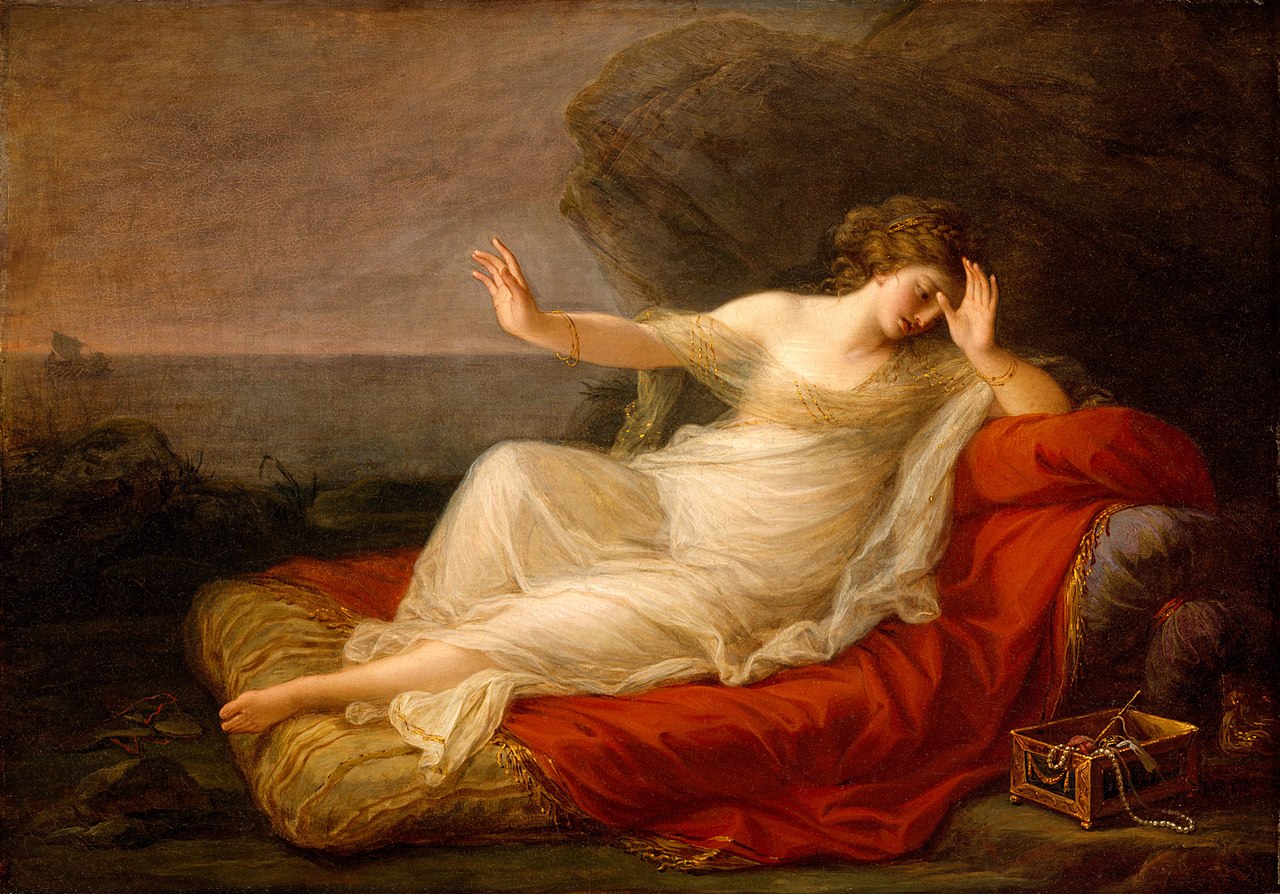
I’ve been thinking about the labyrinth a lot lately. About Ariadne sitting there alone as the story goes on without her.
And it haunts me.
I recently read an excellent post from Alexandra Winteraven that came at a providential moment for me. You see, I’m about to take my next grade in the initiatory system I have been working within for ~29 years. I have reached my Saturn Return within the A.’.A.’., essentially. This grade is the culmination of the mystical, magickal, and philosophical work of my entire adult life. And the initiatory model of the A.’.A.’., despite its situatedness within Thelema, which is absolutely not a tradition based upon transcending the physical world (read Liber AL closely for the evidence) is still based upon the Golden Dawn grade system and the Tree Of Life as a psychocosm, both of which are transcendental models, or at least have been coopted by a mysticism of transcendence.
In the Hermetic Qabalah, the Divine permeates the entire system and there is nowhere on the Tree that is not a manifestation and emanation of the Ain Soph. But there is still a basic notion of manifested reality as a “fall” from “unity” and “spirit” into “division” and “matter”. Keter, the Crown, is way up at the top and Malkuth, the Kingdom, is way down here with us in this aching world, right above the qliphoth. Since I’m not new to the dualistic value systems prevalent in human cultures for thousands of years, its pretty hard not to see the implied value judgments all through this. Up is good, it’s where Heaven is, down is bad, it’s where Hell is. To use more ancient terminology, up is towards “the heavens” and down is towards “the underworld”.
Sure, “Keter is in Malkuth and Malkuth is in Keter, each after their own kind”. I’m quite familiar with the holographic/holoeidetic model of reality. I was taught it, I believe it, have taught it in the past, and continue to teach it in the present. I am not debating that model’s coherence or empirical adequacy. I’m a true believer. But the system I have worked within has an obvious progressive order in which things are done, and the grade associated with Malkuth is at the beginning and the one associated with Keter is at the end. No amount of holographic/holoeidetic notions of theology or metaphysics changes that, because down here in Malkuth of Assiah, we live in time and have to pursue our projects—like pursuing an initiatory path—in a temporal sequence from beginning towards end.
This notion of a mysticism of transcendence and of physical existence as a “descent” from something “higher” doesn’t begin with the Hermetic Qabalah, of course, which, despite my high esteem for it as a body of doctrine, is actually a reasonably recent development. Instead this notion has its origins in Antiquity, with the first occurrence (of which I am aware) being Plato’s “Phaedrus”. But it permeates Western mysticism, with many working definitions of the Great Work including a narrative of a unification (or reunification, to be more precise) of the microcosmic mystic with the macrocosmic “godhead”.
The general thrust of my mysticism has thus tended to be focused on a return to the unity of the Divine, a “going home” or “reversion”, as it is sometimes called in the Neoplatonic literature. This was strongly fueled by lifelong and persistent feelings of homesickness for a place I have never been, a sort of forlorn feeling of cosmic loneliness that has haunted me as long as I can remember. Because these feelings lined up with the teachings I received from trusted sources, I have believed in and pursued this transcendental model of mysticism for most of my life. To be clear, I don’t blame my beloved teachers Kurt, Francine, and Tony, or the writers of the various books I have read, for perpetuating this teaching. It was the model they inherited, as well, and we all have to contend with a broken, suppressed, and sometimes fraudulent history in this business.
But ironically, as I leave one grade to move into another, as my Great Work comes to another of its great climaxes, I find myself not only rejecting the mystical model of transcendence as inconsistent with the insights and visions I’ve experienced over the course of my magickal and mystical career, but also rejecting that model because I have become suspicious. I feel like this whole idea of what magick and mysticism is about is not just faulty, but manipulative and exploitative. It seems like it is meant to funnel something that is wild, powerful, and fundamentally non-dualistic into a safe, predictable, and—above all—orderly channel. A channel that specifically removes mages and mystics from any meaningful place in our larger communities and disempowers us from causing meaningful social and political change.
In this series, I wish to explore this suspicion and what I believe we—by whom I mean modern mages and mystics living in the early 21st century—should do in our current situation.
In “On the Genealogy of Morality: A Polemic”, Friedrich Nietzsche (1887) made an interesting and—for his late 19th Century readers—startling argument. He argued that ethics as they existed in 19th century Germany did not arise, as most moral philosophers have argued, either as divine command via revealed holy text or as a reasoned expansion on innate ethical intuitions, but as an insidious manipulation. He argued that what has been put forth—specifically by Christianity—as moral goodness, by which he means ethical values such as mercy and especially altruism, is actually a manipulation by the “weak” to seize power from the “strong” using emotional manipulations. He tells a story more than a history, and makes all sorts of appeals to things he thinks will sound good to his readers, such as “nobility”, while simultaneously playing on the interconfessional strife between Protestants and Catholics that was common in Germany before WWII by developing a notion of a “warrior caste” being deviously supplanted by a “priestly caste”. He is able to do a lot of work with such appeals to emotion and a sort of “appeal to masculinity” that at, some points, sounds more like a manosphere podcast than a philosophical argument, but in the end it all comes down to this: we’ve been duped and what we’ve been taught to value is actually here to enslave us.
Well, not us, exactly. The noble. The strong. The “blond beast” that has been adopted by so many racists as their own image (though that may have been a later addition by his sister, I am not familiar with the current scholarship on that issue). The kind of people with whom Nietzsche invites us to identify with by agreeing with his argument.
Please understand that I am not criticizing Nietzsche for making appeals to emotion…I make rhetorical appeals to emotion in my work all the time. Chapter 14 of the rough draft of “Towards A Philosophy Of Magick” is full of appeals to emotion, as I’m sure some of you are aware. Blameworthy attitudes and behaviors cause problems and sometimes the only way we can sense how those problems show up in the world is with our emotions. As many victims of abuse and injustice can attest, sometimes something feels bad long before we can logically articulate why exactly it is bad, and I don’t think we should wait until logic or moral philosophy catches up to reality for us to stop bad things from happening. Obviously emotion alone is not a trustworthy guide for our attitudes and behaviors, and we have to especially be conscious of power dynamics before we assume that our discomfort should be centered in a given situation, but I believe that our emotions do, in fact, give us some form of knowledge.
It’s true, I was originally trained in the analytic tradition, where the epistemology is usually empiricism and the metaphysics is usually materialism, and it’s true that analytic philosophy is known for its rigid adherence to classical two-value deductive logic and its devaluing of emotion. Thus, by the standards of analytic philosophy, an “Appeal To Emotion” is an informal logical fallacy. But how else do I explain my marriage, my odd preference for one person’s company over that of all others and my commitment to share my life with them, if not by an appeal to emotion? How else do I explain my willingness to spend so much time and effort writing poetry, for which I gain little more than the joy of creating a paltry attempt at beauty? How else do I explain my pursuit of the Great Work itself, a pursuit that has motivated the majority of my major life choices? These are some of the most important choices of my life, and there was nothing else I could have possibly based them upon except my own emotions. The only answer to whether or not I should spend my life with my spouse can only come from my feelings of love and my emotional attitude of commitment. Likewise, only my inspiration and love of beauty can inform my choice to write poetry.
Thus it seems to me that emotion is actually a pretty good justification for some things. Emotions may not be a good source of warrant (reason to believe the truth of a proposition) about a claim like “the cat is on the mat” or “snow is white”, but those aren’t the only kinds of claims for which I must account in my philosophy. Sometimes the claim is “I love this cat” or “snow is beautiful”, and in those cases I need those appeals to emotion, I need to know how I actually feel, to know what is true.
Yes, it’s true that my emotions—and my introspections in general—are not public facts empirically available to others in the world. But I don’t think it’s possible to orient myself in the world in all the ways that I must by reason and empirical evidence alone. I often need my actual desire, love, or even rage to answer the question of “what should I do?” in any given moment. In Thelemic language, sometimes I need “pure will, unassuaged of purpose, delivered from the lust of result” (Liber AL 1:44) to know what to do and it is an error to fall into the “pit called Because” (Liber AL 2:27). In fact, as someone who was in my fair share of fights when I was young, I can tell you that sometimes trying to think about what you’re doing while you are doing it is the best way to get hurt.
In any case, as anyone who has read my philosophical work can attest, I have ranged far and wide since my school days and I see no need to limit myself to the norms of analytic philosophy. I am no longer a student trying to please my professors (pace, Dr. Brown and Dr. Hacking, and rest in peace), and for many years now I have been primarily a sort of “pagan existentialist” (compare with Christian Existentialism…one of my primary influences is Søren Kierkegaard). My logic is paraconsistent, my epistemology is phenomenalist, my metaphysics is idealist, my moral philosophy is virtue ethics, and I don’t feel guilty about any of it.
So, using a lot of emotional appeals, Nietzsche tells us a story, a story which I mostly disagree with because it is both radically ahistorical and it requires us to believe that the ethical systems of dozens of distinct cultural lineages over a period of thousands of years all stem from a mean-spirited conspiracy by the resentful “weak” to steal the rightful power of the “strong” by convincing them to give it up without a fight. This story also invites us to believe that the world of 19th century Germany was gripped in an ethics of altruism that hamstrung the “strong”, preventing them from dominating the “weak” as Nietzsche believed they should, which is frankly ridiculous. Germany in the 19th century was radically anti-labor, radically sexist, radically antisemitic (and racist in general), and was gripped by one war and upheaval after another as the “strong” stumbled their murderous way across history, unhampered by any sort of altruism or mercy. The “strong” trampled the “weak” as they chose, mostly without any consequences or accountability, and priests and pastors alike defended this as “natural” and “God’s will”. Nietzsche mistook the professed ethics of his culture, the loudly espoused ethics of the church and the classroom, for the actual ethics of the world in which he lived. This is an understandable error for a sickly philosopher living as a recluse…he saw the world primarily through books, newspapers, and the accounts of his family, and thus he saw not the world but the narrative the world likes to tell itself about itself.
But such a fundamental misunderstanding is a luxury that I cannot afford.
In the world that I actually live within, the strong dominate the weak using barely concealed threats on the one hand and a steady stream of paltry rewards that ensure dependence on the other. The ultimatum is clear: accept the crappy deal being offered by the wealthy and powerful to work for them, buy their products, and let them be in charge, or suffer the consequences. The carrot or the stick. They are quite willing to let us have toys and diversions—bread and circuses—and those of us with a certain amount of privilege can even use words like “the liberal democratic world order” to describe what is happening if that makes us feel better, but in the end the wealthy and powerful wield both the carrot and the stick and they use them to steer the world around.
But mystics don’t care about the carrot or the stick. Many of us don’t care about how much we suffer or how we benefit at all. We are often too busy chasing what I call resonance to pay tribute, fight in wars, or court the powerful. We are building relationships with the Divine and doing our true wills (for those of you that believe in such a thing). That can be a hell of a motivation, the kind of motivation that can’t be convinced by threats and feels insulted by bribes. Mystics can be especially dangerous to established power structures because mystics tend to subvert ecclesiastic hierarchies and sidestep the normal pressures of politics and wealth. Mystics can live in caves and spend all their time praying and meditating but still end up being more influential than the people with all the money and the armies.
One paltry example among many: over a billion people in the world consider St. Anthony Of The Desert a saint, literally a sanctified human who connected directly with the Divine during his human lifetime, and people have believed this about this one humble mystic who lived in a cave, weaved prayer mats, and worked out his salvation with fear and trembling, for over 1600 years. In contrast, how many people can remember who was president of the United States a mere century ago without consulting Wikipedia? Who the richest person on Earth was? Millions of people venerate St. Anthony every day and pray for his intervention…people have to be threatened with bad grades to remember who Calvin Coolidge was for a week so they can regurgitate it once on a test and then forget it forever. And yes, I had to look it up.
Mystics have power. Wild, dangerous power. The kind of power that gets people imprisoned. Beheaded.
Crucified.
So I want to tell you a story. My story is a lot like Nietzsche’s…it’s only vaguely historical and it invites you to believe that a lot of distinct historical lines of culture and authority lined up in just the right way to create a certain modern situation. But I’m a mage and I believe in both spirits and egregores so, unlike Nietzsche, I actually have an causal explanation for why all of these distinct historical events and forces lined up just the way they did, and I can sum that explanation up in a single word. I can point out our oppressor.
I see you, spirit: Empire is your name.
In my story, the spirit of Empire starts out small. They are just a little wisp of a thing, born out of the simple desire of a small group of prosperous people, probably traders and chieftains, warriors and kings, to no longer have to worry about their neighbors competing with them. They didn’t just eye the property and resources of their neighbors with greed—that would have just made them another group of raiders—but with an eye to ongoing advantage without having to constantly fight for it. They wanted access to the resources of their neighbors without having to conquer them and then having to actually do the work of running their kingdom. They wanted control without risk or responsibility and wealth with as little effort and cost as possible. They wanted a tribute, a percentage, a subscription fee. They wanted a regular bribe to not pillage, rape, and destroy.
The dubious relationship between liege and vassal arises from this desire to control without having to fight, and our modern notion of taxation descends from the ancient notion of tribute extracted by kings. We modern folks in so-called democratic societies like to talk about the “social contract”, the “consent of the governed”, and how we all have to pay into the system for the system to work, but very few people want to talk about how no one gives us a real choice about whether we want to be a part of that system, or any system, at all. Most of us are born into citizenship somewhere, indoctrinated into believing it is a privilege, and then given bills to pay and told to go to work as soon as possible. Just try to withdraw your “consent of the governed” and you will find out exactly what the relationship between any government and their citizens is really about: the power of that government to commit violence and extract wealth with impunity.
They teach us all a history that makes it all seem natural and normal, but when we look at it from the Xeno Position, from the point of view of the Alien, the outsider, it all just seems like a ridiculous game where only one side knows they are playing. And that game has an origin: Empire.
Over the course of the early generations of wars and expansions, either the spirit of Empire was born as an egregore or an opportunistic spirit was able to attach itself to this chain of events and sets of people and objects in the world. We will probably never know which and it’s basically immaterial at this point.
As my story continues, this small spirit that will become Empire gains adherents among the wealthy and powerful of the early human world. They are encouraged by this spirit to Think Big and Make Things Bigger. It is not enough to rule the village or town or city. It is not even enough to build an army and conquer every neighbor who won’t pay a bribe—ahem—tax. Instead the whole world must become One Big Machine to funnel power and wealth to the Right People, and that sort of machine runs on two things: wealth and blood.
So more and more wealth and blood are sacrificed to this small spirit. The spirit gets bigger. Grows fangs and claws. City becomes City-State, City-State becomes Kingdom, and finally Kingdom becomes Empire.
But this adolescent spirit has a problem. Their nature is to Think Big and to Make Things Bigger. They are a spirit of Make Number Go Up. So they need people, lots and lots of people, and they need resources, lots and lots of resources. As they grow, their knowledge of the world grows, and with each step, with each new attempt to build us humans and our world into their perfect body, the One Big Machine has to get bigger.
Please remember that Empire is not evil. Harmful, yes, but not evil in any normal sense. Empire feels compelled by their nature. They have to conquer and incorporate. They have to reproduce themselves in every nook and cranny they can reach. They have to get bigger. They are cancer made into a way of life, a spirit so hungry that they could eat all of existence and still not be satisfied.
Frankly, it must be horrible. My heart breaks for this poor spirit, a being defined by dissatisfaction, by the constant yearning for bigger, better, faster, and more. They are constantly gorging and yet they are as emaciated as a skeleton, as hollow as a drum. They are in great pain.
So what does young Empire do to try to fill the void, to quell the pain? They try to take over the world, because of course they do. From Akkad to Rome, Empire sprawls out across space and time, getting big and strong and growing into the spirit equivalent of young adulthood. They start to feel secure. Mature. Like they know who they are. Accordingly, Rome later becomes the paragon of empires, the empire by which all future empires are judged. But this very definition of identity makes Empire notice all of the people within them that don’t fit with that identity. They look wrong or they pray wrong or they are just old or sick. These people are useless as sources of wealth and they mostly don’t spill any blood, so Empire wants to get rid of them. They turn the forces of violence that were once focused on the enemy upon their own people. Injustices of various forms result, with Empire feeding off of the violence and suffering.
And this is where Empire’s problems begin. Because humanity isn’t alone. We are surrounded by the world of deities and spirits, nymphs and faeries, and since the beginning some of these beings have communicated with us and intervened in the fate of humanity. Some of these communications and interventions have been at least portions of myths and holy texts like Hesiod’s Theogony, the Vedas, and the Tanakh, other interventions have been avatars like Krishna and Jesus, and yet another form of intervention has been the proclamation of “aeonic words”, formulae describing a modality of interacting with the Divine, by certain mystics called to do so, sometimes called “magi”. I will go into the issue of aeonic words and my working theory about them at another time (hint: words are parts of sentences), but for now I simply want to acknowledge them as a form of intervention by deities and spirits in the fate of humanity.
The common element in all of these forms of divine communication and intervention is human mystics. Mystics had inspirations and visions and wrote them down to form holy texts. Avatars and magi brought new mystical formulae into our shared awareness. And all of that kept interfering with the goals of Empire.
Imagine you are Empire. It’s 33 CE or so and you’ve just overseen the execution of yet another one of these “messiah” people. All is well, now you and your new favorite person Julius can get back to the business of keeping the wealth and blood flowing. And then, over the next 300 years or so, an eyeblink to a spirit like you, the teachings of that guy you just executed metastasize and take off. Suddenly people are talking about peacemakers being blessed and turning the other cheek, soldiers and rulers you are anchored to are having conversion experiences left and right, and people who should have been good Roman citizens were making a big stink about the rampant violence and injustice. People are refusing to pay their bribes—ahem—taxes and refusing to fight each other for your amusement (and sustenance). What do you do?
Then it occurs to you. A stroke of genius.
As my story continues, and this is just a story (but what isn’t?), Empire gets an idea. They can’t prevent deities and spirits from communicating with humanity or incarnating as avatars. They can’t stop mystics from proclaiming aeonic words. Torturing and killing them just seems to encourage them, channeling them into state religions just leads to the mystics subverting the new state religions into new forms of legitimate mysticism…the problem seems insoluble so long as Empire tries to attack the mystics directly.
But what if the mystics were redirected? What if they were convinced that rather than trying to fight back against the abuses of Empire, they should turn inward and try to “die to the world” instead? What if their efforts towards changing their world were redirected? What if they were convinced to sacrifice themselves in elaborate political dramas and moral victories, becoming mere martyrs—witnesses—rather than agents of change in the world? What if the magi who were sent to humanity by the gods to help them fight back against Empire were convinced that they should pursue “ego-death” instead, become passive, and just focus on not doing anything at all for fear of accruing bad karma? What if the mystics were convinced that being incarnated is a big burden and mistake and that, rather than trying to embrace, love, and protect the world, we should all just focus on our breathing until it all goes away?
Well, I don’t need to ask you “what if?”. You’re living in it.
In part 2 I will explore how the different strains of Western mysticism and magick have been rendered politically inert as a set of historical events. Until then, I invite all of you to ask yourselves this simple question: “What would the world would be like without Empire?”
I welcome your answers in the comments.
Works Cited:
Friedrich Nietzsche translated by Horace B. Samuel, On the Genealogy of Morality: A Polemic”, (originally published 1887, retrieved from https://standardebooks.org/ebooks/friedrich-nietzsche/the-genealogy-of-morals/horace-b-samuel on 7-10-25)
Art: Angelica Kauffman, “Ariadne Abandoned by Theseus”, (1774)
this lit me up. thank you for naming the quiet violence baked into so many “sacred” systems, the way even mysticism can become a containment strategy for the wild and the true. i’m deeply honored that my words arrived at such a potent threshold for you.
what you’re tracking here, the suspicion, the refusal, the grief, the rage, it’s the stuff of real liberation. descent over escape. coherence over control. i see you naming empire in the places it doesn’t want to be found. and i feel the power in that.
may your next grade not be a climb, but a rooting. may it burn clean. 🔥
Wow, high praise and bright blessings! Thank you very much!
Excellent work here. In my mind one can pursue “ego-dissolution” while still being active and working in alignment with one’s channeled ideals. I would say that Buddhism is a good example of what doesn’t work sometimes in the context of widespread social issues when faced with the tyranny of the Other (e.g. Tibet).
In any case, I like the idea of the Word being part of a Sentence or Utterance that, when in alignment, assist humanity in becoming more self aware by rendering the veil slightly more transparent.
Great Work!
(P.S. Nice integration of the Pusifer lyrics into the context of your position; it seemed inspired 😊)
Thank you, Chris! And thanks for reading.