
An essay on magick, mysticism, and living the spiritual life. Written, as always, without authority.
“I dig my hole, you build a wall,
I dig my hole, you build a wall,
One day that wall is gonna fall” -Darren Korb, “Build That Wall (Zia’s Theme)”, (2011)
In the first part of the story which I have been telling—and please remember that if you become frightened, you can always tell yourself that this is only a story, just a bit of fancy an old poet has decided to spin out for you—a very special sort of character was introduced. Empire, who is both our hero and our villain, the plucky kid who made good and the monster in the closet, is a spirit, a sort of being which is often defined as a mind without a body. Whether Empire is naturally occurring or an artificial spirit created over time by many people feeding energy into a single idea (commonly called an egregore in the biz) is more or less immaterial and an academic question at best.
To address the obvious issue: no, I do not think we should be thinking in terms of waging some sort of magickal war upon Empire. I will admit that not too long ago, I did believe that we should go to war. My grandfather was an airman for 20 years and served in two wars, and he had a large part in raising me. He was a huge influence upon me growing up and taught me a certain way of thinking. I fell into that way of thinking late last year (2024). But I was wrong. Not only would such an approach invite reprisal from a powerful spirit that essentially runs the world, but it would also most likely lead to blameworthy attitudes and behaviors on our own parts. War is the tool of Empire, and no matter who apparently won such a war, Empire would be the true victor. Over the course of such a war we would be twisted and warped to fit the logic of Empire. We would be forced to push for “bigger, better, faster, more”, to put forth our own prescriptive model like their One Big City, and even if we seemed to win, in the end we would end up reproducing the structures of Empire all over again. I have watched this happen in activist and magickal communities my whole life…we think we are being strong and taking a stand against the villains, and in the end the villains end up taking over from within.
So I have another suggestion.
In the story I am telling, some group of humans in early history made a pact with a spirit (or brought a spirit into being) and that spirit has defined much of our shared reality ever since.
We can do the same.
We can consciously create new spirits and make pacts with existing spirits we already know about in order to purposely build the world in which we want to live. We can actively build strong relationships with deities and spirits in order to gain ouranic, cthonic, and yes, even truly infernal aid. We can create alternatives to Empire, as varied and beautiful as we can imagine, and set them in motion not in competition with each other, but in cooperation. True cooperation, by which I mean mutual aid, mutual protection, solidarity, and consensus-based decision-making, can offer a way for Empire to come home.
But we have to do this carefully. Such things have been attempted before. They have been co-opted by Empire into tools of oppression and exploitation. In this part of this essay I wish to explore exactly how that sort of thing happens and the dynamics of power that we contend with when we struggle with Empire.
In the early days of the Roman Empire, a group of Jewish and Greek mystics came to the fore, led by a man known by various traditions as various things, including possibly an avatar of the divine Logos, the Jewish messiah, or simply a mystic who became the magus of the aeonic word Agapē (Αγάπη). This man preached peace, love, and a sort of apocalyptic view on world affairs that did not even do the world of his time—already defined by Empire in many ways—the courtesy of rebelling against it. Early Christian communities were gloriously revolutionary, throwing into doubt not only the rule of Rome, but the rule of greed, corruption, violence, and cynicism that Rome epitomized. And they did this not by fighting against that world, not by raising armies and causing harm, but by sidestepping it, by simply trying to create a new and better world order without asking for anyone’s permission or sponsorship, all on their own. They built their own communities and lived out their gnosis on their own terms. Jesus did not want to be king or to raise a new king to power. Jesus didn’t even want a revolution in the normal sense. Read the Gospels…creating a new earthly government was completely beside the point. Jesus wanted to render the entire notion of kings and governments obsolete. He wanted our concern with the spiritual life to become the primary concern in our lives.
In one of the funniest—and yet most misunderstood—moments in theological history, Jesus says “Render unto Caesar the things that are Caesar’s, and unto God the things that are God’s” (Matthew 22:15-22, Mark 12:13-17, and Luke 20:20-26) in a world where in Jesus’s belief absolutely everything belongs to God. He appears to say something that is very hard for any dutiful Roman soldier to argue with, but when you know the theological positions that Jesus makes clear elsewhere in the Gospels, Jesus is clearly saying: “Caesar isn’t even a factor in the equation. He doesn’t own even one molecule of this world. Every bit of it belongs to God.” He delivers this incredible line with such a straight face most people still don’t get the joke.
And that’s hilarious. Jesus was a master of irony.
Now fast-forward 350 years or so. There is no more irony. Christianity is the official religion of the Roman Empire and Christian archbishops are anointing imperial authorities with “the Church’s” seal of approval. The remaining Christian mystics that still see the world in the terms of Jesus’s teachings, in our time often called the “Desert Mothers” and “Desert Fathers”, have retreated from the cities to the desert. But rather than building the new heaven and new earth, rather than taking up Jesus’s cross and following Him in lived and transformative action in the world, they declare “death to the world” and live in isolation, contending with the passions, praying, and working out their salvations in fear and trembling. Their lives and stories end up being used as marketing material by the “the Church” and as ways of safely incorporating and co-opting the many deities and spirits of this world into the monotheism desired by Empire. And most importantly, while these saints live lives of prayer and devotion, avoiding vice and seeking virtue in very praiseworthy ways, the real powers in “the Church” turn their attention to the real goals of “the Church”: empowering and justifying Empire and providing both religious fervor and moral justification to the conquest of the world by the rich and powerful.
Please understand that I am not condemning the mystical practices of these early Christian mystics at all, nor of the faithful followers of Christ since then who attempt to truly follow Him. I have learned a lot from them and especially venerate St. Mary Of The Desert and St. Hildegard Of Bingen. I went through a period of exploring Christian mysticism and both hesychasm and the Christian Existentialism of Søren Kierkegaard inform my own spiritual life a great deal. But when the best of your religion, the people most concerned with actually living out the values of that religion, collectively opt out of the political and social realities of the world you live in, that leaves the opportunists and anglers, the monsters and the dictators, to take control. In Kierkegaard’s language, you end up with “Christendom” instead of “Christianity”, and that makes all the difference in the world.
When people like St. Mary flee to the desert, that leaves people like “St.” Augustine to decide what Christian doctrine and practice actually looks like for the rest of us. That leaves people like the “golden-tongued” antisemite “St.” John Chrysostom to inspire and give an excuse to the Nazi regime. And the history of that body of institutionalized exploitation, abuse, control, and violence that calls itself “the Church”—and yes, I include that odious creation of Martin Luther and his theological descendants called “Protestantism” and the modern heresy called “Evangelicalism” under that dubious title—is proof of that fact. Every genocide, every pogrom, every privilege and exploitation by the rich and powerful of the “Western” world since Emperor Constantine, has been justified, aided, and then apologized for by “the Church”. And the people who truly believe in Jesus’s aeonic formula of Agapē were (and are) too weak from fasting and prayer to stop them. Mount Athos is full of mystics powerful enough to call all of horrid Christendom to account, but instead they sit in their cells, mumble the Jesus Prayer, and ignore all of the suffering caused in the name of the one they hold holy.
Again, please do not misunderstand me. I am not condemning these people for pursuing mysticism. I believe that mysticism is a truly praiseworthy and worthwhile pursuit. I have dedicated most of my adult life to my pursuit of my spiritual life and regularly urge others to do likewise. What I am condemning is the refusal to engage, the willingness to allow the bad actors to take the lead, and the avoidance of holding bad actors accountable characterized by Christian mystics of all sorts.
An additional problem is that the bad actors use the tiny minority of these mystics within their organizations as success stories to sucker other people into believing in their hierarchies. One person like St. Hildegard Von Bingen is used as an excuse for the authority of millions of people like Thomas of Torquemada. And this is not just the Roman Catholic Church…Orthodoxy does the same thing. Extremely rare paragons of virtue like St. Paisios of Mount Athos are held up to distract away from the far more common excesses of vice like the Russian Orthodox Church’s support of Putin’s atrocities against Ukraine or the opposition by the Orthodox Church Of America to Washington state’s Senate Bill 5375 requiring priests to report cases of child abuse and neglect. Excuses like “the Church is a human institution with human problems” that I heard so often during my time in the Orthodox Church just don’t pass the straight-face test when the rest of the time that same Church claims to speak for the Divine Themselves and to interpret scripture in the correct way because the Holy Spirit guides them. If the Holy Spirit guides “the Church” when it comes to telling women they can’t be priests and when it comes to voting for the next patriarch, why are They so silent when it comes to making sure kids aren’t getting abused?
The example of Christianity is one place Empire was able to co-opt genuine mysticism and sincere people trying in earnest to live the spiritual life. But we see the same thing in our modern magickal traditions. In 29 years of pursuing magick and mysticism within the Western Esoteric Tradition, I have seen many orders, covens, and traditions come and go. I have even been a part of some of them. And one recurrent theme has been that the bad actors end up first taking control and then running things into the ground. Eventually everyone quits except the bad actors and then we just have another crappy group of mages running around doing crappy things until it falls apart and they all go off to ruin other groups and the whole cycle happens again.
And the good actors, for the most part, end up letting this happen again and again, because we have allowed ourselves to be convinced that trying to hold people accountable, to speak our own truth and hold our own boundaries, is somehow naughty. Prideful (or hubristic, if you want to make a finer cut). Some of us are so afraid of being aggressive or combative that we can become deeply avoidant of conflict, which means we can fail to hold bad actors accountable or remove them from positions of power. By not being willing to engage in interpersonal conflict to preserve our values, we allow authoritarian power dynamics, what Starhawk calls “power-over” dynamics in “Truth Or Dare” (1989), to take over by default. I have written on this issue before in “On The Blessedness Of Community”, “On The Blessedness Of Leadership”, and “On The Future Of Thelema”.
And I am one of the worst perpetrators of this. As many who knew me in my former life back in Santa Cruz know, I was an asshole. Not a bad actor, exactly, but definitely an asshole. I was aggressive, condescending, and I had that autistic urge to just keep talking and talking until, by the banal magic of rhetorical stamina, I would end up being “right”. After realizing this, I began to hate myself. We all have to make friends with our shadows and that is part of mine. I went into isolation for years not just because of my health problems (the reason I usually give) but because I had become afraid of engaging with the world. I was petrified with a sort of ethical terror of doing anything at all for fear of doing something blameworthy. I watched my friends, colleagues, and siblings from social media and mostly didn’t engage.
Years passed like this, while first authoritarian and then overtly fascist elements began to come to the fore in various communities within which I had once been active. I saw what was happening. I refused to say anything because I didn’t want to be the old Puck, the asshole, the “Dark One” as old Michael Correll aka Uncle Birch used to call me. I didn’t want to have to live out that role anymore. I didn’t want to be the accuser. I didn’t want my nickname to be used as a word meaning “to confront someone in a particularly aggressive and overly logical way” anymore. I turned within and, like the saints I idolized, found refuge in a mysticism of transcendence. I had become so sick to death of myself that I wanted to not just die, but to cease existing even as a soul. I pursued theosis not to approach the Divine in faith and love, not to pursue a virtuous life within the family of the gods (for good or ill), but to pursue a sophisticated form of suicide for people who believe in reincarnation.
And that is bullshit.
That is Empire trying to use my best impulses against me. That is Empire trying to get me to make myself so small, so weak, so frightened, that I can’t hold them accountable. To paraphrase Yeats (1919), Empire wants the best of us to lack all conviction while the worst are full of passionate intensity. This is why Satan, the Accuser, is the villain that Empire fears and hates the most. This is why the angel that is the prosecuting attorney of the Divine and hanging out in Heaven in the book of Job becomes the Big Bad of the Christianity of Empire…because accountability is the one thing Empire fears the most.
Part of the power of authoritarian systems is getting to decide who is held accountable and who, for whatever reason, is considered an exception to the rules. Trump gets to be president even though he has been convicted of dozens of felonies, but a Latino person simply existing on the street is cause for that person losing their freedoms forever. That is the power of Empire.
That’s why anyone who calls out the powerful is demonized. That’s why “The Accuser” is “The Enemy”. That’s why mages and mystics in the “West” who operate outside the auspices of Christianity are automatically classified as Satanists. We stand as an alternative to what Empire is selling, yes, but we also dare to accuse them, to call them out, to confront them over their crimes. And that is dangerous to Empire, who in vengeance makes it dangerous for us. But we must be willing to live with that danger if we wish to be free.
Freedom is always dangerous.
In part 3 I want to talk about Empire as a spirit and as a person. Please look forward to it!
Works cited:
Starhawk, Truth Or Dare, (Harper And Row, 1987).
William Butler Yeats, The Second Coming, (Originally published in “The Dial” in 1920, retrieved from https://www.theotherpages.org/poems/yeats02.html#second on 7-18-25).
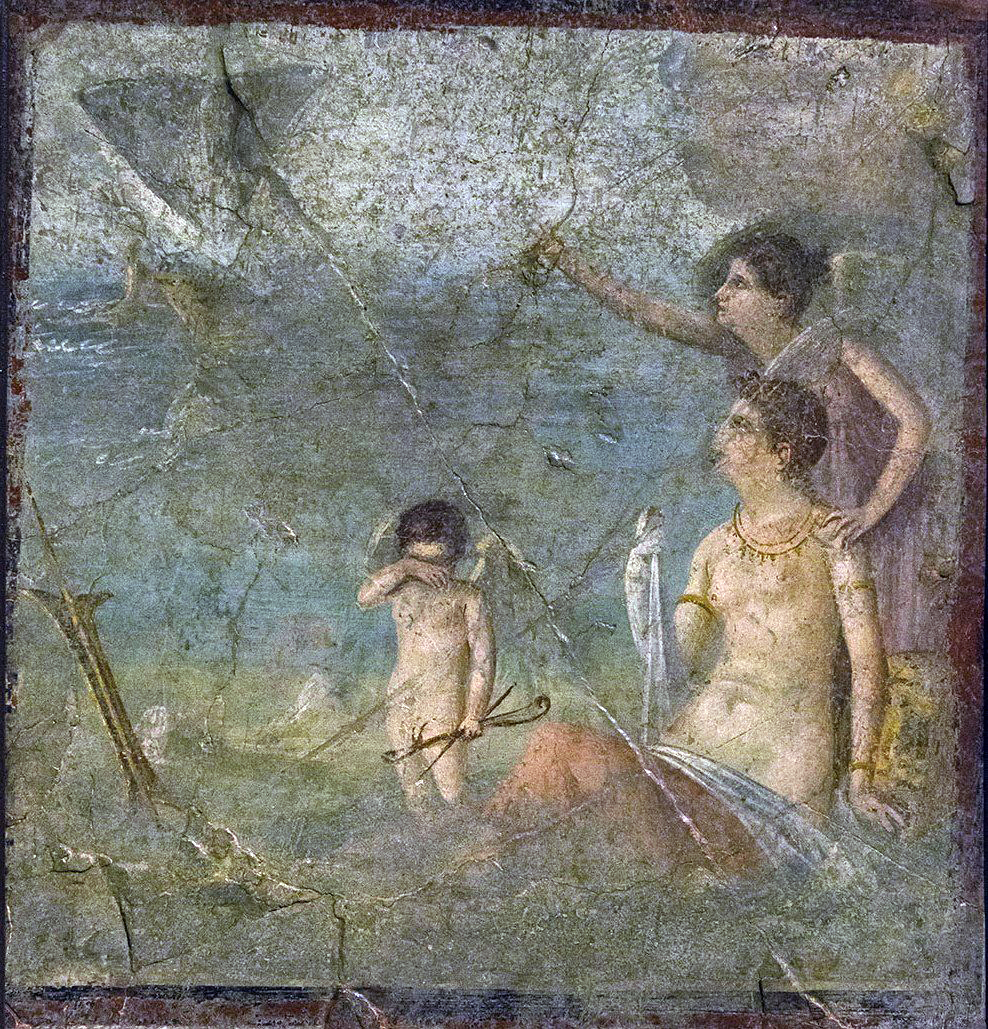
Art: Artist Unknown, “The abandoned Ariadne”, ancient fresco from Pompeii, National Archaeological Museum, Naples, Italy.